Hidden in Plain Sight: How Black Entrepreneurs Are Turning Everyday Connections Into Million-Dollar Deals

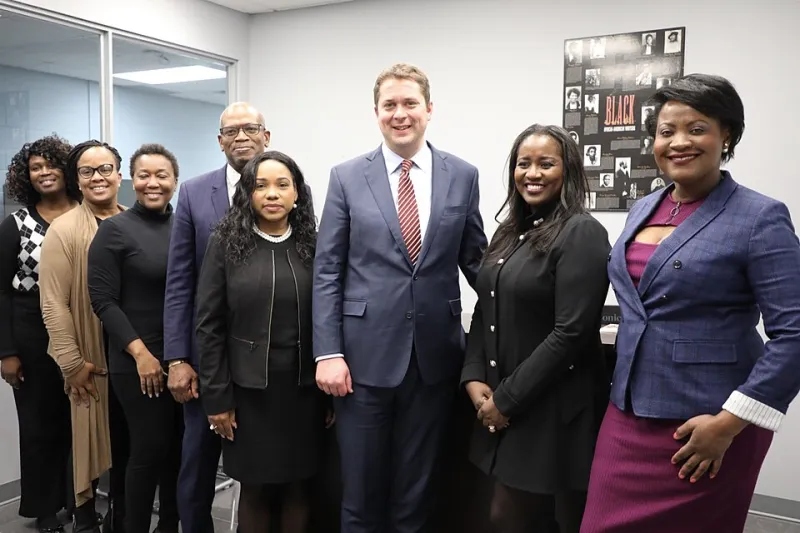
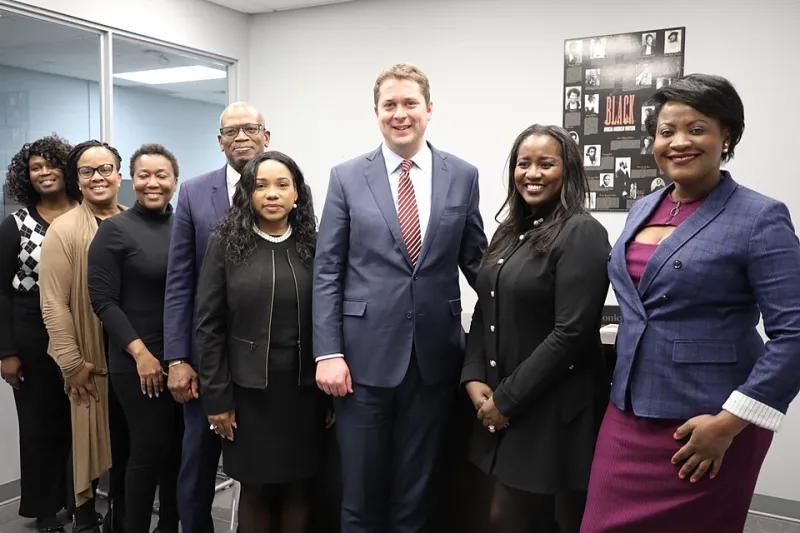
Photo: Andre Forget - Andrew Scheer, CC0, via Wikimedia Commons
Let's be real for a second. When people talk about "networking," they usually mean stiff cocktail hours, name badges, and elevator pitches delivered to people who are already halfway looking past you for someone more useful. That version of networking has never really worked for most Black entrepreneurs — and honestly, it was never designed to.
But here's what's wild: while that old-school model keeps failing us, a completely different kind of network has been quietly generating serious business. We're talking multi-million dollar contracts, game-changing partnerships, and supplier deals that bypassed every traditional gatekeeper. And most of it? It started with a text message, a Sunday service, or a DM from someone who already knew your work.
This is the Black Business Network Effect — and if you're sleeping on it, you're leaving real money on the table.
What the Research Actually Says (And What It Doesn't Tell You)
Studies on business networking consistently show that the strongest economic opportunities flow through what sociologists call "weak ties" — the people you kind of know, not your inner circle. But what that research rarely examines is how systemic exclusion from formal networks forces marginalized communities to build parallel systems that are, in many ways, more efficient.
Black entrepreneurs have been doing exactly that for generations. From the historic Greenwood District in Tulsa — where Black dollars circulated within the community multiple times before leaving — to today's digital-first business ecosystems, the infrastructure of community-based commerce has always existed. The difference now is scale and intentionality.
Platforms like BlackBizList exist precisely because this ecosystem deserves to be formalized, searchable, and connectable. But the digital layer only amplifies what's already happening on the ground.
Real Talk: How These Deals Actually Come Together
Take Denise, a facilities management company owner out of Atlanta. She landed her first six-figure municipal contract not through a procurement portal or a formal RFP — but because a cousin mentioned her company at a city council member's fundraiser. That introduction led to a site visit, which led to a pilot contract, which led to a three-year renewal.
"I had been submitting proposals through official channels for two years," she told us. "One conversation at the right place moved faster than all of that combined."
Or consider Marcus, a Chicago-based logistics entrepreneur who built a $2.3 million annual revenue stream almost entirely through relationships forged in a Black business mastermind group that started as a pandemic-era Zoom call. "We were just trying to survive 2020," he said. "But we kept meeting, kept referring each other, and kept showing up. Now half my vendor relationships came out of that group."
These aren't outliers. They're examples of a pattern — and once you see it, you can't unsee it.
The Three Layers of the Black Business Network
If you want to activate what's already around you, it helps to understand how these networks actually operate. Think of it in three layers:
Layer One: The Trust Circle This is your immediate community — family, longtime friends, your church congregation, your alumni network, your neighborhood. These folks already believe in you. The question is whether they know exactly what you do and who you're looking to work with. Most entrepreneurs assume their trust circle knows their business. Most of the time, they don't. Fix that first.
Layer Two: The Sector Network This is where industry-specific Black professional organizations, trade groups, and digital directories come in. Whether it's the National Black Chamber of Commerce, local MBDA Business Centers, or a well-maintained listing on a platform like BlackBizList, being visible and searchable in these spaces is non-negotiable. This layer is where warm introductions happen at scale.
Layer Three: The Cross-Industry Connector This is the most underutilized layer. These are the people who move between worlds — the attorney who knows the developer who knows the city procurement officer. One well-placed connector in your network can unlock doors that no amount of cold outreach will open. Identify these people. Invest in those relationships before you need them.
Why Reciprocity Is the Currency That Actually Matters
Here's where a lot of people get the strategy twisted. Networking in the Black business ecosystem isn't transactional in the traditional sense — it runs on reciprocity, reputation, and genuine investment in the community's success. If you show up only when you need something, people notice. If you show up consistently, refer generously, and support others publicly, that reputation compounds.
"I give referrals constantly," says Keisha, a Houston-based marketing consultant who grew her firm from a solo practice to a seven-person agency. "I probably send two or three referrals a week to other Black-owned businesses. And because of that, my name comes up when people need what I do. It's not magic — it's just how community works."
This isn't just good karma. It's a documented business strategy. Research on referral-based business models consistently shows higher close rates, lower customer acquisition costs, and stronger client retention compared to cold outreach. In communities built on trust, those numbers skew even higher.
Actionable Moves You Can Make This Week
You don't need a new budget or a new strategy deck. You need to activate what's already there. Here's where to start:
-
Audit your existing network. Go through your contacts — phone, LinkedIn, email — and identify five people who work adjacent to your industry and who you haven't spoken to in six months. Reach out. Not to ask for anything. Just to reconnect.
-
Get listed and get specific. Make sure your business is visible in Black business directories with a clear, specific description of what you do and who you serve. Vague listings don't generate referrals.
-
Name your ideal partner publicly. Post on LinkedIn or Instagram about the type of B2B partnerships or supplier relationships you're looking to build. Be specific. "I'm looking to connect with Black-owned commercial real estate firms in the Southeast" will get results. "Open to networking" will not.
-
Join one new community this month. Whether it's a local Black chamber chapter, an industry-specific mastermind, or a digital group focused on Black entrepreneurship, commit to showing up consistently for at least 90 days.
-
Make introductions before you need them. Connect two people in your network who should know each other. Do it with no agenda. This single habit will change how people think about you.
The Opportunity Is Already There
The Black business network isn't a future project — it's a present-tense asset that's already generating wealth for entrepreneurs who know how to work it. The deals are real. The connections are real. The infrastructure, both digital and community-based, is more developed than it's ever been.
You don't need to wait for a formal invitation into someone else's ecosystem. You're already in one. The question is how intentionally you're using it.
Start where you are. Use what you have. And remember — your next deal is probably one introduction away from someone who's already in your phone.